MAXTECH Heavy-Duty Electro-Hydraulic Marine Crane Twin-jib deck crane 10-100t


Product Introduction
The MAXTECH Large Electro‑Hydraulic Deck Crane is a heavy‑duty straight‑boom crane installed on a vessel’s deck, designed for bulk carriers, barges, container ships and other large vessels. Lifting capacity ranges from 10 to 100 tonnes, and the working radius is customised to customer requirements, typically from 5 to 40 metres.
The crane employs an electro‑hydraulic drive system: an electric motor drives a hydraulic pump, which in turn powers the hoisting, slewing and luffing mechanisms via hydraulic cylinders or motors. The hoist offers stepless speed control from 0 to 20 m/min, and the slewing speed is 0 to 0.8 rpm – all motions are responsive and smooth. The electro‑hydraulic system also incorporates multiple safety features, including overload protection, over‑temperature protection and low‑pressure protection, ensuring long‑term reliability.
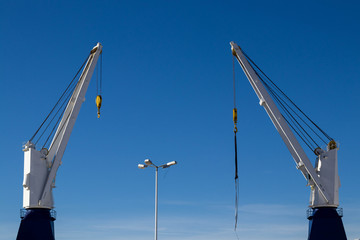
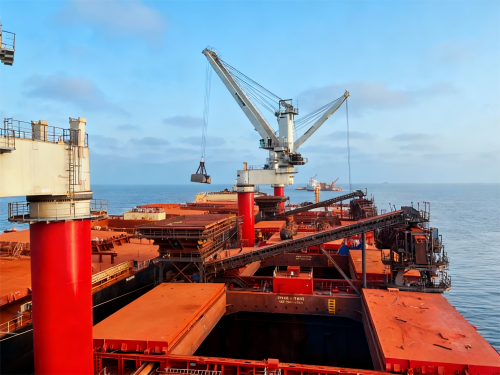
The boom and all major structural components are made from high‑strength marine steel, with a robust design verified by finite element analysis (FEA) to guarantee structural safety even in harsh sea states. The crane is installed on the deck via flanged connection or welding, providing stability and ease of maintenance.
This model can be equipped with hooks, grabs (for bulk cargo), and container spreaders (20ft/40ft) – a true “one crane, multiple uses” solution. Whether for bulk handling, container lifting or general cargo operations, a single deck crane meets diverse requirements. The crane can be supplied with classification society certificates from BV, ABS, CCS, NK, LR, etc., meeting global regulatory standards.
| Product range | ||||
| Crane type | MAX 150 | MAX 250 | MAX 500 | MAX 800 E |
| Max. capacity | 120-180 t | 250 t | 400-500 t | 800-1000 t |
| Typical outreach | 33 m | 33/36 m | 33/36 m | 39 m |
| Auxiliary Hoist | 45 t | 45 t | 60 t | 60 t, 10 t sling |
Certificates
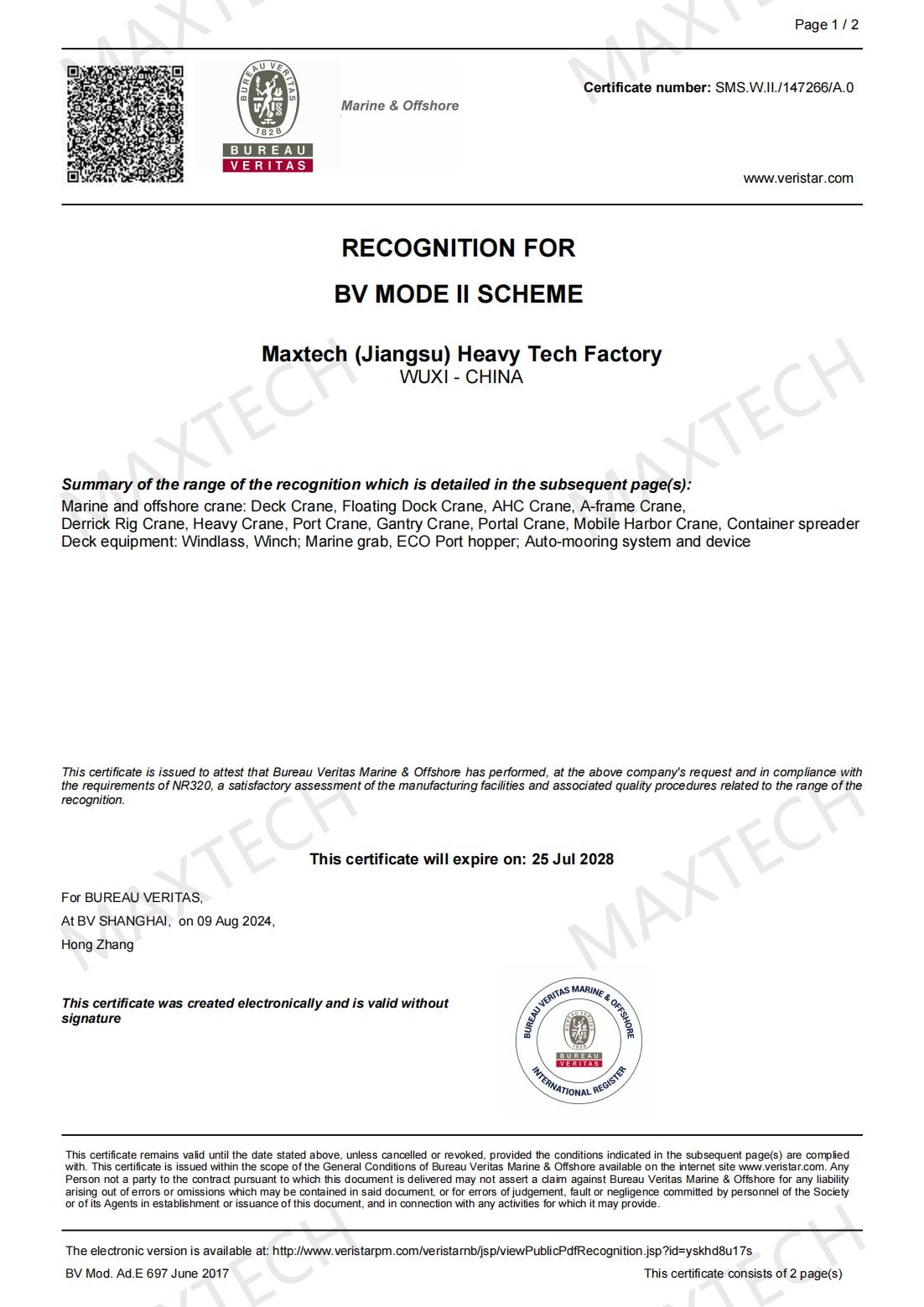
1. Manufacturing Standards: The product is designed and manufactured in strict accordance with the latest effective specifications of the classification society at the time of contract signing to ensure that the product quality meets industry standards.
2. Classification Societies: BV, CCS, ABS, KR, LR , et.
 3. Testing and Certification: Before leaving the factory, the equipment needs to undergo strict tests, including performance tests (lifting, luffing, and slewing movements with rated and overload loads), emergency stop confirmation, manual brake release tests, limit switch confirmation (under no - load conditions), and insulation resistance measurement. The test records of each item will be submitted to users to ensure reliable product performance.
4.Industry Certifications: Quality certificates and factory test reports are provided to provide strong evidence for product quality and allow users to use the product with confidence.Safety Certifications: CE (European Union), ISO 9001(International Organization for Standardization)