Globally, lifting equipment used on vessel decks, offshore oil platforms, or port terminals must meet a series of stringent certification requirements. These certifications not only determine whether the equipment can be legally installed and operated but also directly reflect the manufacturer’s design, manufacturing, and quality control capabilities. This article outlines the main certifications required for different Marine Crane types and usesMAXTECH as an example to show how these standards are met.
1. Marine Cranes / Deck Cranes
Installed on the decks of bulk carriers, container ships, chemical tankers, etc. The main certifications include:
| Certification | Description |
|---|---|
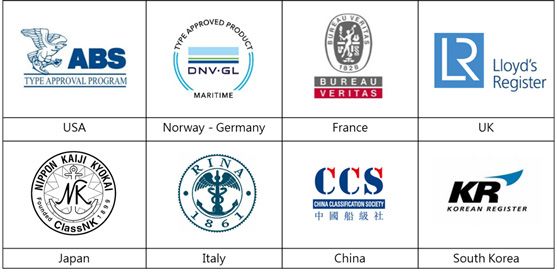
| Type Approval | Issued by classification societies such as BV, ABS, CCS, NK, LR, DNV – confirms design complies with rules |
| Product Certificate | Each offshore crane receives a classification society certificate after inspection (e.g., BV Crane Certificate) |
| Material Certificates | Traceable certificates for critical structural steel, welding processes, fasteners, etc. |
| Load Test Witness | Classification society surveyor witnesses 125% dynamic load and 150% static load tests on site |
MAXTECH practice:
MAXTECH’s marine deck cranes can be supplied with full certificates from major classification societies including BV, ABS, CCS, NK, LR. For example, the recently delivered 3t/12m telescopic knuckle boom explosion‑proof crane obtained a BV product certificate, all materials have EN 10204 3.1 certificates, and the load tests were witnessed by a BV surveyor.
2. Offshore Platform Cranes (Offshore Crane)
Used on FPSOs, drilling rigs, wind turbine installation vessels, etc. In addition to classification society requirements, they must meet special oil industry standards:
| Certification | Description |
|---|---|
| API‑2C | American Petroleum Institute specification for offshore cranes – covers design, manufacturing, testing |
| API Q1 | Quality management system for the petroleum industry |
| DNV‑OS‑E101 | DNV’s standard for offshore cranes |
| ATEX / IECEx | Explosion‑proof certification for Zone 1 / Zone 2 hazardous areas |
| ISO 19901 | General requirements for cranes on offshore structures |
MAXTECH practice:
MAXTECH’s offshore crane series is designed in strict compliance with API‑2C using finite element analysis and dynamic load testing. For platforms with explosion‑proof requirements, MAXTECH offers fully sealed electrical systems with ATEX Zone 2 certification. Its 3t/39m offshore crane has obtained an API‑2C compliance statement and an BV product certificate.

3. Port Cranes (Port Crane / MHC / RHC)
Including Mobile Harbour Cranes (MHC), Rail‑Mounted Harbour Cranes (RHC), portal cranes, etc. Certification focuses on safety and stability:
| Certification | Description |
|---|---|
| CE Marking | Required for export to Europe – complies with Machinery Directive 2006/42/EC |
| ISO 4301 | Crane classification |
| FEM Standards | European lifting equipment design standards |
| Local Safety Approvals | e.g., EAC for Russia, Customs Union certification |
| Seismic Certification | Required in earthquake‑prone ports |

4. Basic Manufacturer Certifications
Regardless of crane type, the manufacturing facility itself must also possess the following qualifications:
| Certification | Description |
|---|---|
| ISO 9001:2015 | Quality management system |
| ISO 45001:2018 | Occupational health and safety management |
| ISO 14001:2015 | Environmental management system |
| BV Factory Approval | Recognition of manufacturing capability by Bureau Veritas |
MAXTECH practice:
MAXTECH has obtained ISO 9001, ISO 45001 and BV Factory Approval, with annual surveillance audits. These certifications form the foundation of customer trust.
5. Additional Certifications for Special Conditions
| Condition | Certification Requirements |
|---|---|
| Low temperature (e.g., Arctic routes) | Materials require -40°C impact toughness certificates; welding procedure qualification must cover low temperature |
| Explosion‑proof environment | ATEX / IECEx equipment certificate; electrical explosion‑proof approval |
| Deep‑water deployment | DNV‑GL certified deep‑water winches; wire ropes require API‑9A / 9B certificates |
MAXTECH practice:
MAXTECH can custom‑build low‑temperature and explosion‑proof cranes and provide a complete certification package. For example, a 35t deck crane supplied to an Arctic‑route bulk carrier used main structural materials that passed -40°C low‑temperature impact tests.
6. Practical Advice on Choosing Certifications
- Select according to end‑user and flag state – The shipowner or platform operator often specifies the classification society. European owners prefer BV, DNV; Asian owners often choose ABS, NK, CCS.
- Plan the certification path early – Decide which certificates are needed during the design phase to avoid costly rework.
- Choose an experienced supplier – A manufacturer like MAXTECH, familiar with multiple class societies and API standards, can greatly reduce certification risk and lead time.
Summary
Whether for a marine crane, offshore crane, or port crane, certifications are an indispensable “passport”. From basic ISO and classification society certificates, to oil‑industry API‑2C and explosion‑proof ATEX, to region‑specific CE and EAC – each certification represents the safety and compliance of the equipment.
MAXTECH has extensive certification experience and a complete qualification system. Based on your project location, operating environment, and flag state requirements, we can provide a “one‑stop” certification package. If you are looking for compliant, reliable, and customisable lifting equipment for your next vessel or port project, MAXTECH deserves your attention.
Post time: Apr-24-2026