Dynamic sea conditions – including vessel heave, DP drift, hook snagging, and wave slamming – can induce transient overload (GOPS-level), which is the primary hazard for overside offshore lifting. Conventional LMI load limiters provide the basic protection layer. MOPS (Manual Overload Protection System) and AOPS (Automatic Overload Protection System) are dedicated to transient peak overload, working together with FMS (Failure Mode Sequence) as the final safeguard. These systems complement each other rather than serve as alternatives. MAXTECH offshore cranes are fully equipped with both MOPS and AOPS, complying with international offshore crane standards.
MOPS: Manual Overload Protection
Mandatory per API 2C and IOGP S618 for all overside cranes, MOPS is manually activated by the operator via a dedicated yellow protected button on the console. It handles slowly developing overload conditions such as gradual hook entanglement and DP drift. Once triggered, the hoist brake releases to pay out wire rope with a low retention force (10%–20% of rated load). It is restricted to seaside operation and disabled during man-riding mode. An energy storage system ensures three activation cycles within five minutes even under power or hydraulic failure, with a visual indicator and an external 110 dB(A) audible alarm.
AOPS: Automatic Overload Protection
Recommended by EN 13852-1 and IOGP S618 for operations where significant wave height Hs ≥ 2 m, AOPS continuously monitors boom angle, hook position, reeving, hook load, and luffing load. It activates instantly for sudden overload or overmoment from wave slam, fast snagging, or vessel pull-away – even under blackout. The key distinction from MOPS is that AOPS maintains a retention force ≥ SWL during payout, so the load will not drop. It resets automatically once the load returns to a safe range and only activates when the boom is seaward and the hook is below deck level, avoiding hazards on the platform.
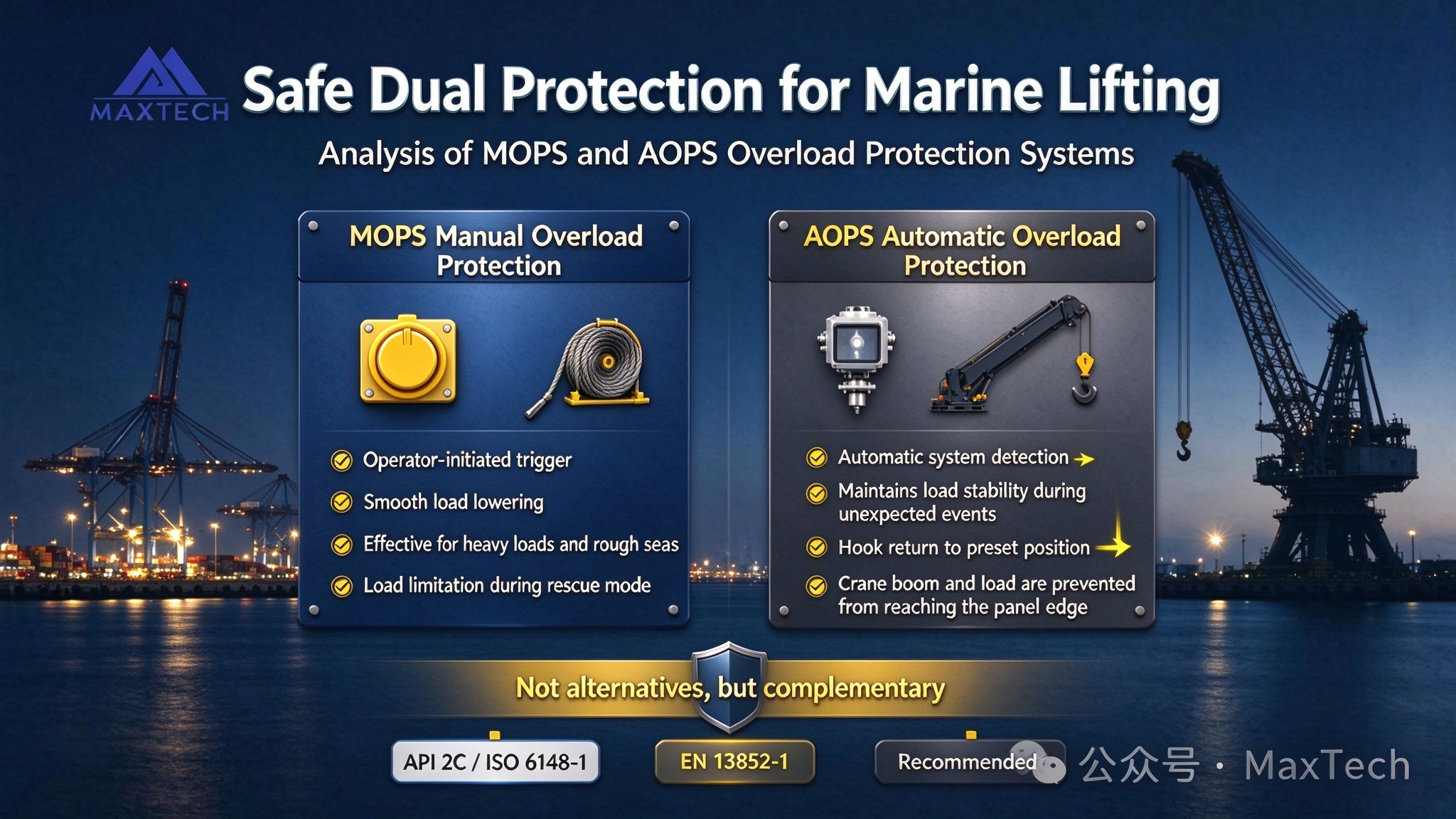
MOPS and AOPS: Complementary, Not Interchangeable
- MOPS: Operator-initiated, low holding force, risk of load drop, mandatory fitment.
- AOPS: Auto-triggered, load retention ≥ SWL, no dropping risk, designed for rough sea states.
Shared features include compatibility with all reeving configurations, survival under power loss, overload relief by rope payout, and multi-layer safety together with FMS. The design target is structural stress ≤ 85% yield under 2× maximum wave impact.
MAXTECH – Integrated Safety for Global Lifting Projects
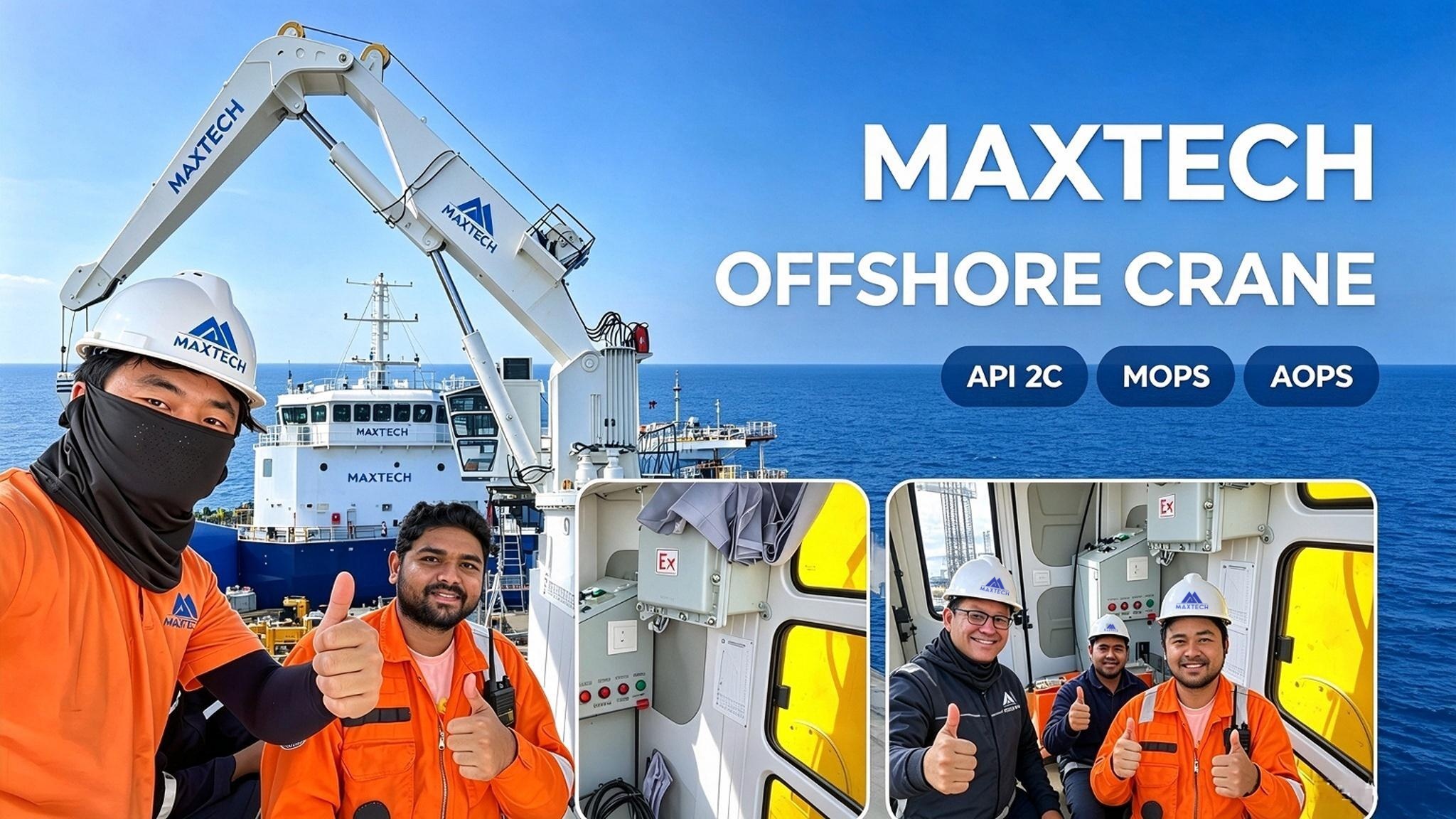
MAXTECH integrates MOPS and AOPS from the design phase. System performance can be verified via the ATT auto test tool to meet DNV and ABS survey requirements, and is widely used for overside lifting in oil and gas, offshore wind, and marine supply vessel operations. Backed by our technical service hub in the Middle East and a global network of after-sales service points with positive customer feedback, MAXTECH delivers not only compliant offshore cranes but also full-lifecycle support – including commissioning, calibration, and survey assistance – for our worldwide clients.
Post time: Nov-06-2026