The deck crane — commonly known as a marine crane or ship crane — is one of the most critical pieces of equipment on a vessel. It is a self-contained cargo handling device where the boom, hoisting, luffing and slewing mechanisms, and operator cabin are integrated into a tower structure that rotates 360° around its pedestal. From daily cargo handling to heavy-lift transport and offshore supply transfers, deck cranes play an indispensable role across the maritime industry.
I. Main Types of Deck Cranes
By boom type:
- Straight boom cranes: Fixed-length boom — simple and robust, widely used.
- Telescopic boom cranes: Extendable boom for adjustable working radius, suitable for frequent reach changes.
- Knuckle boom cranes: Foldable boom for compact stowage — ideal for vessels with tight deck space.
By power source:
- Hydraulic cranes: The most common type, offering high load capacity, smooth operation, and easy control.
- Electric cranes: Low noise, low energy consumption, gaining attention under tightening environmental regulations.
- Manual cranes: Older type, now rarely used as standalone equipment.

II. Core Advantages of Deck Cranes
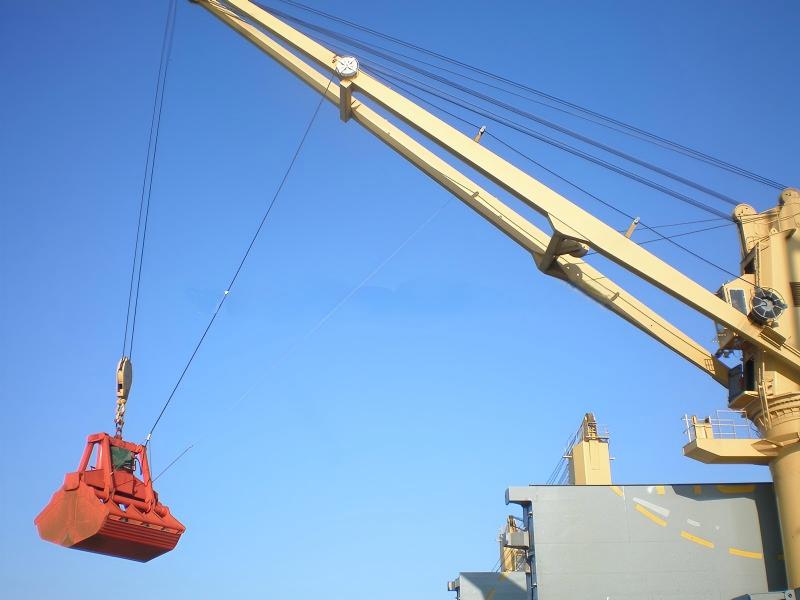
- High handling efficiency: Better load positioning reduces cargo movement within holds; crane can serve both forward and aft holds.
- Easy operation: Minimal preparation time; operator enjoys wide visibility from elevated cabin.
- Compact footprint: Clean deck layout, less space occupied than derrick systems.
- Handles heavy/oversized cargo: Especially suitable for containers, project cargo, and heavy lifts.
Limitations to consider:
- Heavy self-weight and high centre of gravity affect vessel stability.
- Higher initial investment.
- High power demand on shipboard supply.
- Maintenance requires skilled technical personnel.
III. Key Applications
- Bulk carriers and general cargo ships: Traditional application for coal, ore, grain, steel, etc.
- Container ships: Provides self-loading/unloading capability, especially useful at ports without shore-based cranes.
- Multi-purpose heavy-lift vessels: Equipped with multiple heavy-lift cranes (single-crane capacity reaching hundreds of tons) for wind turbine components, large machinery, and oversized cargo.
- Offshore engineering and special-purpose vessels: Used on buoy tenders, research vessels, and supply ships for equipment deployment, recovery, and offshore transfers.
IV. Market Trends
The global marine crane market is on a steady growth trajectory. In 2025, Liebherr's maritime crane segment reportedly generated €1.246 billion, up 23.1% year-on-year. Key trends driving the market include:
- Intelligent control systems: Automation, remote monitoring, and digital twin technologies enabling condition monitoring and predictive maintenance.
- Energy efficiency: New electronic control systems with automatic idle, load-relief, and low-energy designs.
- Electric drive adoption: Electric cranes deliver zero emissions and higher energy conversion efficiency, aligning with stricter environmental regulations.
V. MAXTECH's Deck Crane (Marine Crane) Products
As a well-known Chinese manufacturer of marine and port equipment, MAXTECH offers a comprehensive marine crane product line covering various types and applications:
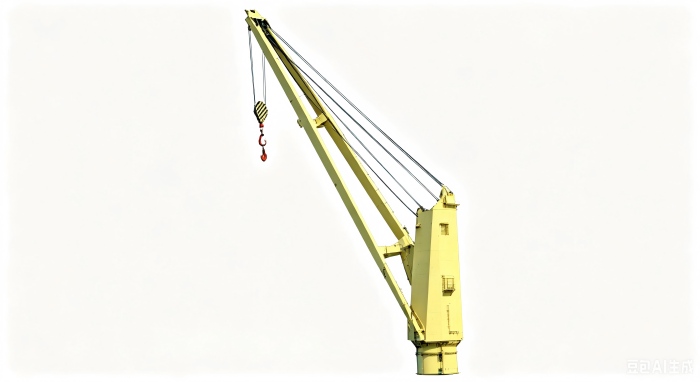
- Telescopic boom marine cranes: Featuring pedestal-mounted slewing design and high-strength steel construction, with working radii from 5 to 30 metres and lifting heights up to 40 metres, suitable for bulk carriers, container ships, and other vessel types.
- Knuckle boom telescopic cranes: Combining the flexibility of a knuckle boom with the reach of a telescopic boom, with extremely low stowed height. Available in lifting capacities from 1 to 10 tons and working radii from 5 to 20 metres.
- Deck cranes: Fixed design with lifting capacities up to 100 tons and maximum working radii of 50 metres.
- Offshore cranes: Designed for offshore oil platforms, wind turbine installation vessels, and similar applications, featuring salt-spray resistant coatings and sealed components to withstand high-corrosion, high-wave marine environments.
MAXTECH's deck crane products hold multiple international classification society certifications, including ABS, BV, CCS, DNV, KR, and RS, and serve customers across the globe — meeting diverse requirements from general cargo vessels to offshore engineering ships.
VI. Selection Guide
When choosing a deck crane, consider:
- Lifting capacity: Based on vessel type, cargo type, and future demand.
- Boom type: Straight boom for ample deck space; knuckle boom for tight spaces; telescopic boom for variable reach.
- Power source: Hydraulic for conventional operations; electric for environmental and cost benefits.
- International certifications: Choose products with classification society approvals for global compliance.
- After-sales support: Evaluate the supplier's global service network and local support capabilities.
The deck crane remains the backbone of cargo handling on ships — from daily operations on bulk carriers to heavy-lift project cargo and offshore engineering. With continued advances in intelligent control and electric drive technologies, this "deck powerhouse" is evolving toward greater efficiency, safety, and environmental sustainability. Whether for newbuild vessels or retrofits, selecting the right deck crane is a critical decision that directly impacts operational efficiency and long-term value.
Post time: Jul-27-2026